HARRIET TUBMAN
ARTIST STATEMENT
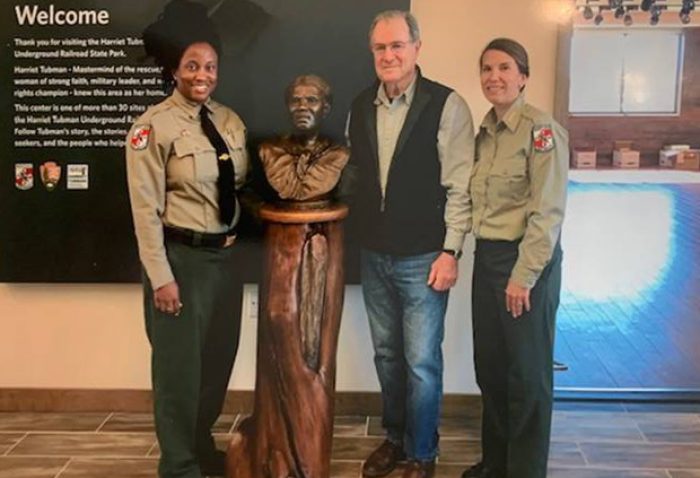
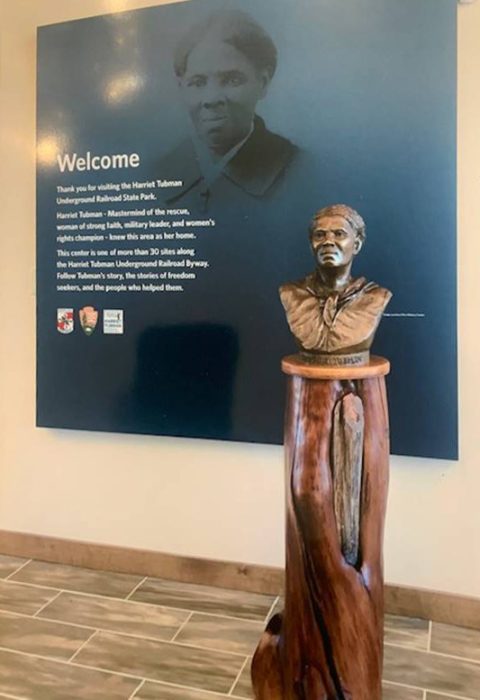
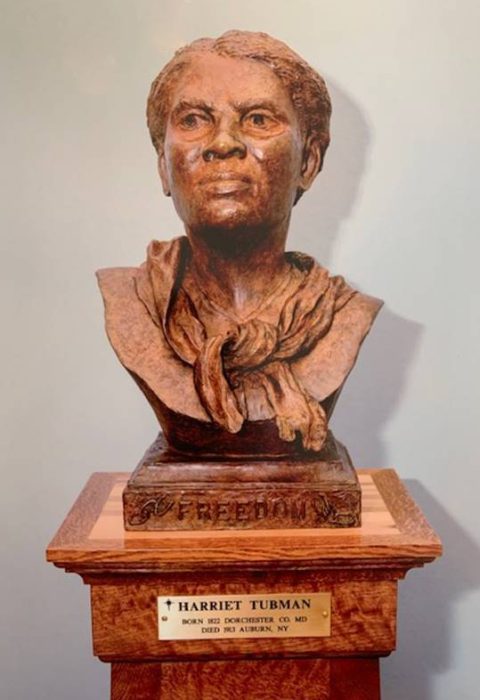
This life–size bronze bust of Harriet Tubman portrays her as a young woman in her 30’s, as she would have looked when she traveled the Underground Railroad in the 1850’s. Her turned head and slightly raised chin signify not only her watchfulness but also suggest a powerful internal strength and approachable dignity. A decision was made to portray Ms. Tubman without her headscarf or bandana in order to depict her freedom from any vestige of bondage.
The bust resides atop a Red Cedar log capped with a slab of ancient “Wye Oak“. This solid base is different from many hollow wooden pedestals and was selected to symbolize the many aspects of Ms. Tubman’s life and character.
The Wye Oak slab is cut from the tree that stood for 460 years in Wye Mills, Maryland, signifying her Maryland roots and deep connection to our Maryland history.
Red Cedar of course is indigenous to the Eastern Shore and Dorchester County, Harriet Tubman’s birthplace. This particular log was carefully chosen because of its typical spiraling form and splayed branch bringing to mind Ms. Tubman’s unique journey. It represents her early work with her father as a logger, cutting and hauling logs for transport to the shipyards of Baltimore. It also signifies her travels on the Underground Railroad through Maryland and Delaware woodlands, which provided cover and sanctuary. Most importantly the simple log base represents her character- strong, unyielding and protective.
Finally, the height of the pedestal and bust is 5‘, which was the actual height of Ms. Tubman. Visitors may be struck by the smaller stature as they continue through the Visitors Center and consider the magnitude of the impact she had on our country’s History.
With Deep Respect,
Brendan Thorpe O’Neill
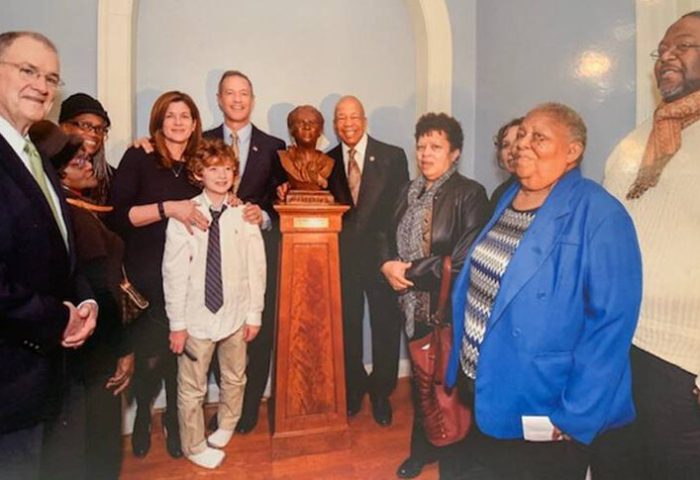
The first bust of Harriet Tubman was commissioned by then Governor O’Malley and displayed in the governor’s residence in Annapolis, MD. “Harriet Tubman is one of the most inspiring Marylanders and greatest Americans we have ever known, and I’m grateful for Brendan O’Neill Sr. donating his talents to share her history with generations to come,” Governor O’Malley said. “In commemorating the life of Harriet Tubman, we’re ensuring that the healing light of those who shine against the darkness of human frailty will never dim.” Brendan replied, “I am honored to have been involved in this project to pay tribute with my sculpture to such an iconic figure in Maryland and American History. I wanted to portray Harriet as a young woman in her 30’s as she might have looked at the time of the Underground Railroad and to create an image of a powerful yet simple young woman, humble yet watchful, and strong in leading her people.”
UNVEILING OF "THE GIFT"
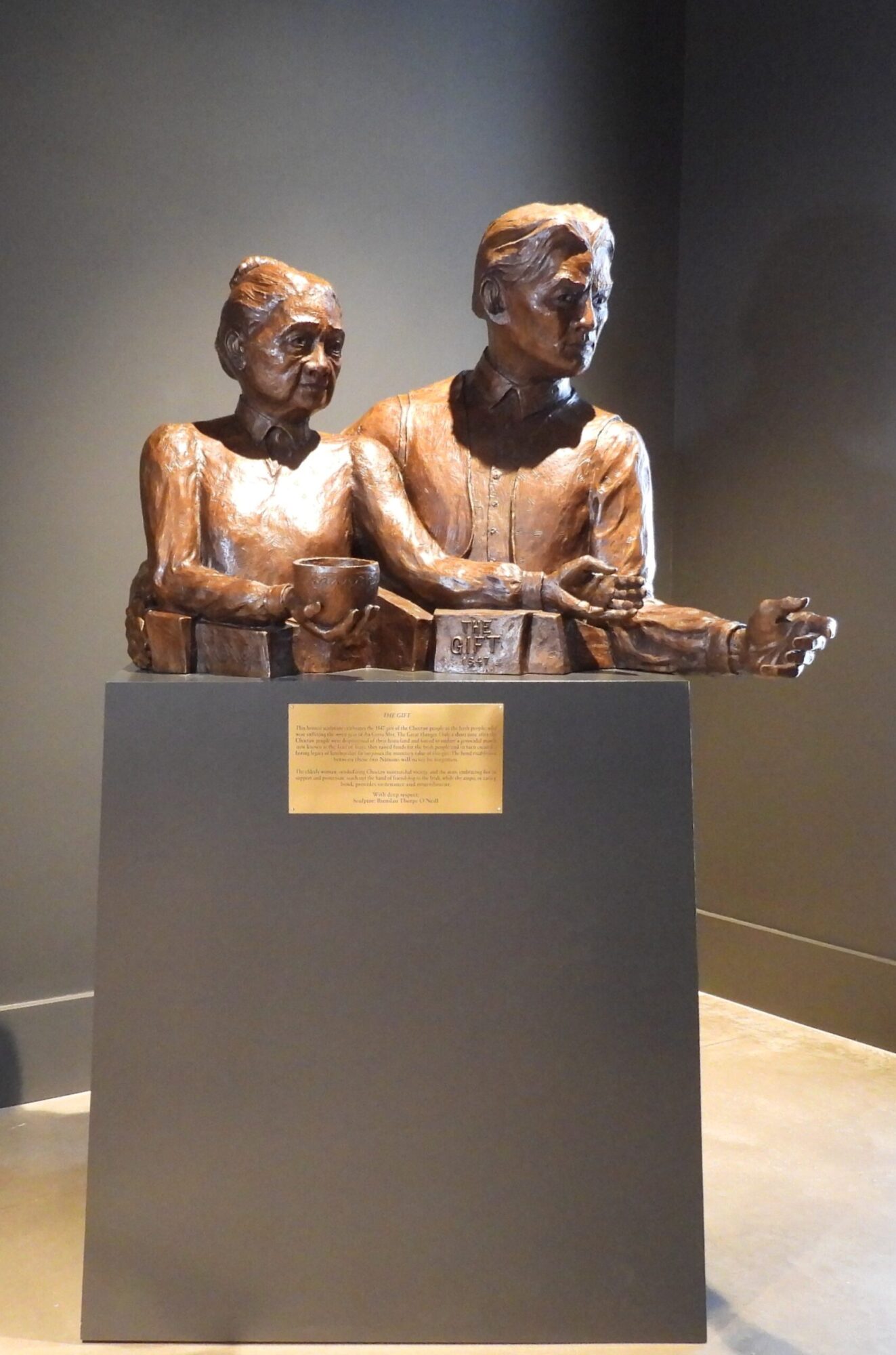
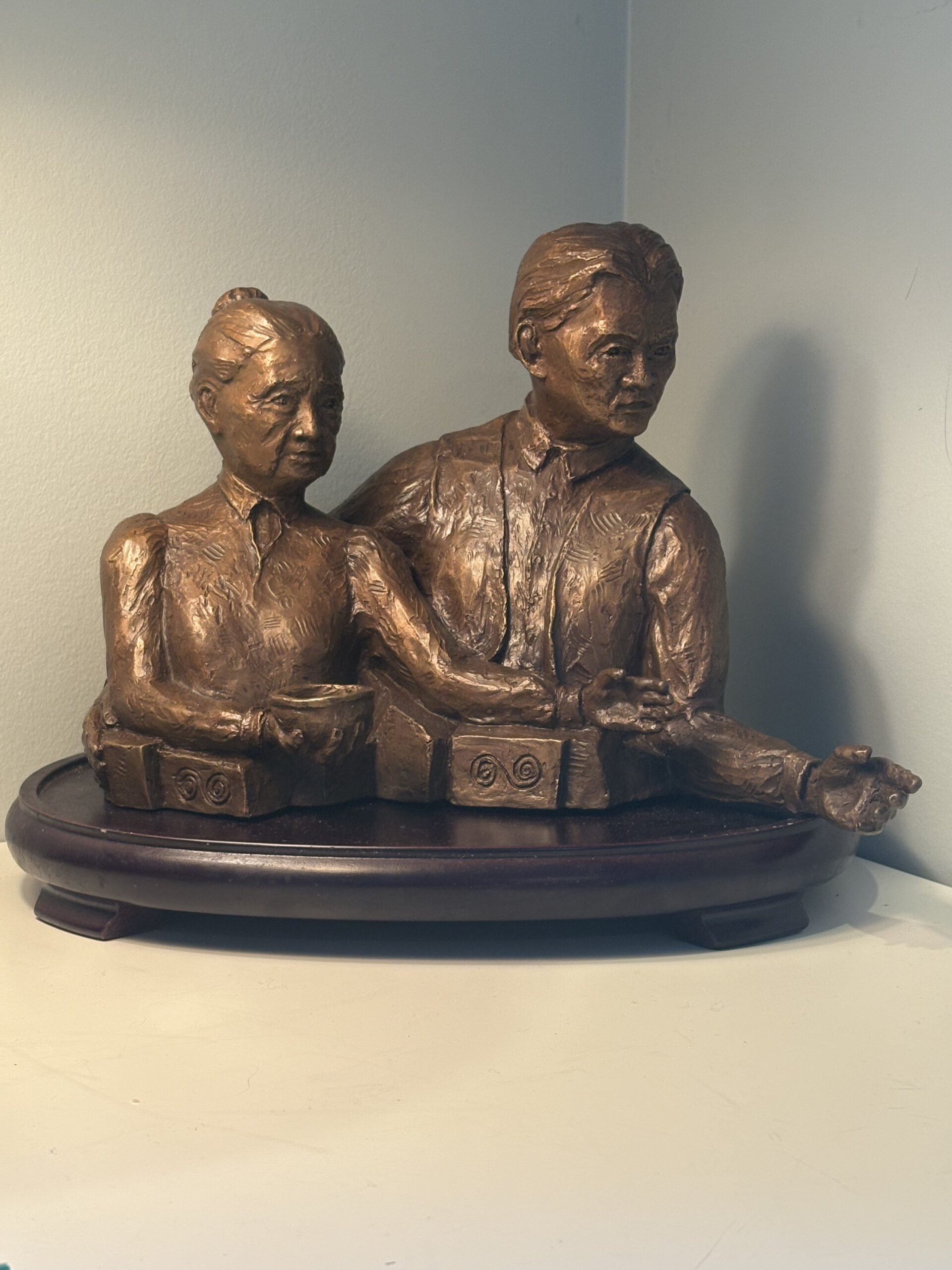
This bronze sculpture, entitled “The Gift”, celebrates the 1847 gift of the Choctaw people to the Irish people, who were suffering the worst year of An Gorta Mor, The Great Hunger. Only a short time after the Choctaw people were dispossessed of their homeland and forced to endure a genocidal march now known as the Trail of Tears, they raised funds for the Irish people and in turn created a lasting legacy of kinship that far surpasses the monetary value of this gift. The bond established between these two Nations is manifest in so many ways, including cultural exchanges, scholarships, ceremonial visits and donations during subsequent crises. The elderly woman, symbolizing Choctaw matriarchal society, and the man, embracing her in support and protection, reach out the hand of friendship to the Irish, while the ampo, or eating bowl, provides sustenance and nourishment.
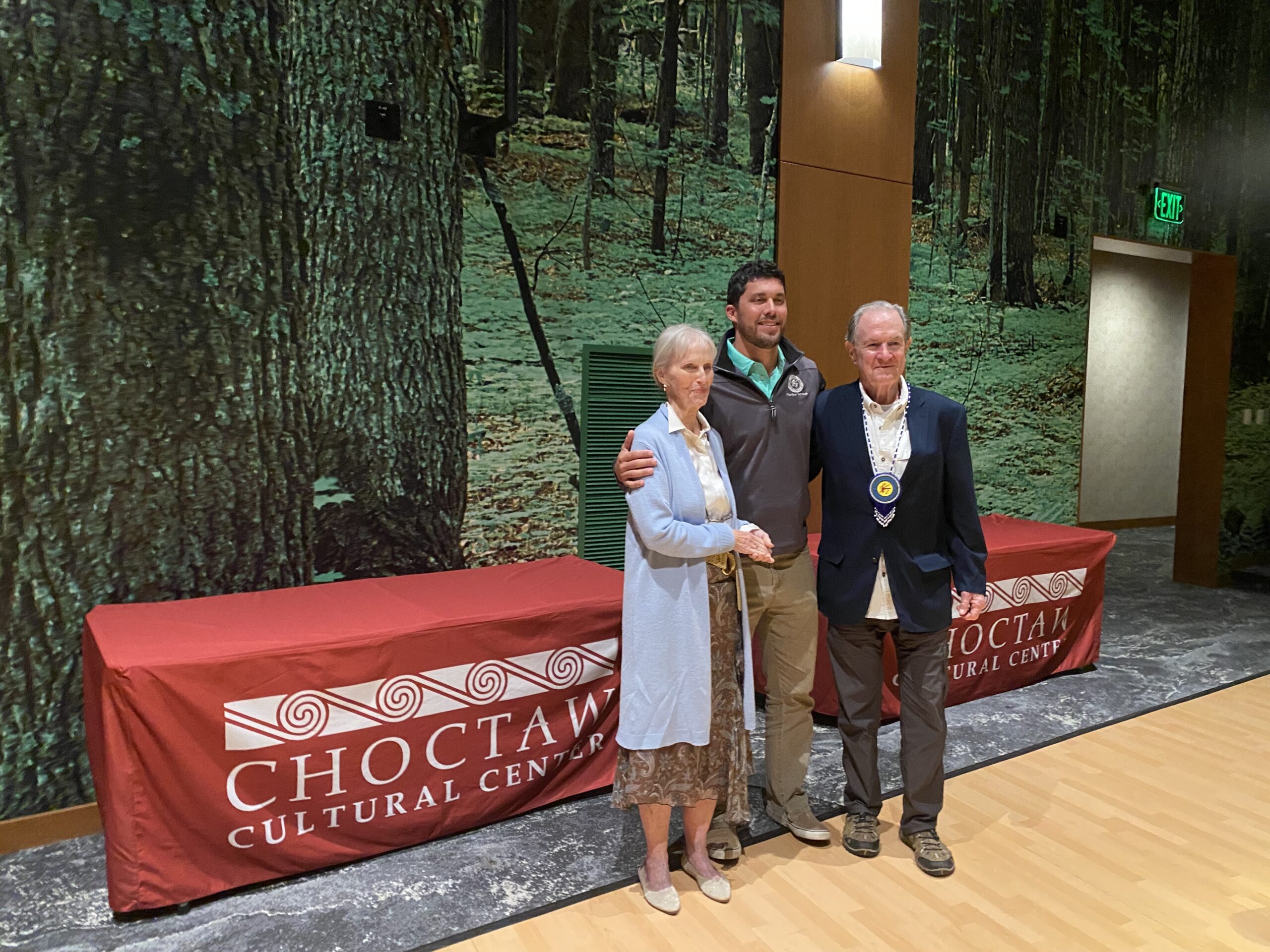
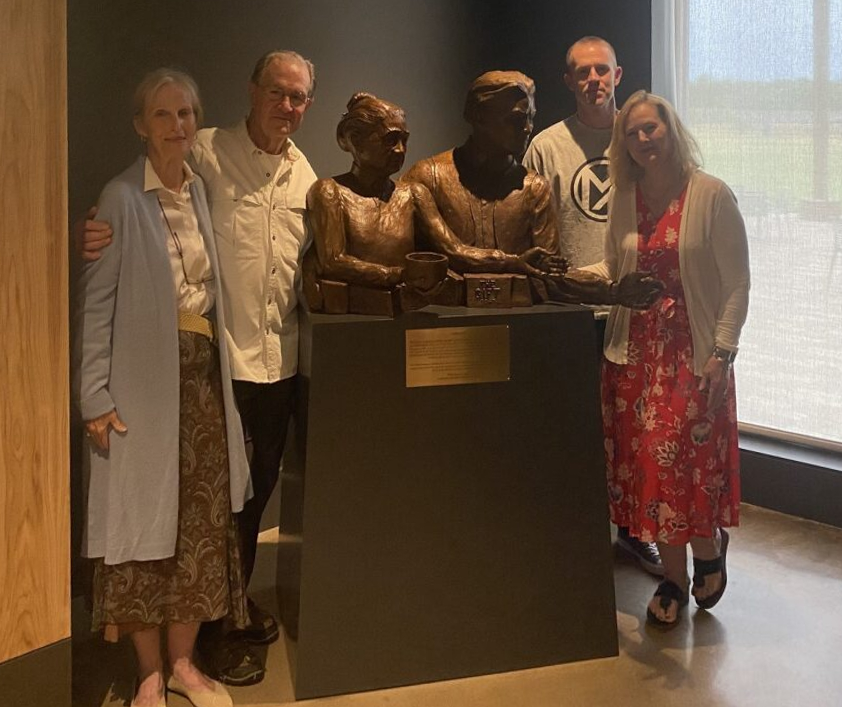
Artist with wife Susan and Seth Fairchild, Director of the Choctaw Cultural Center
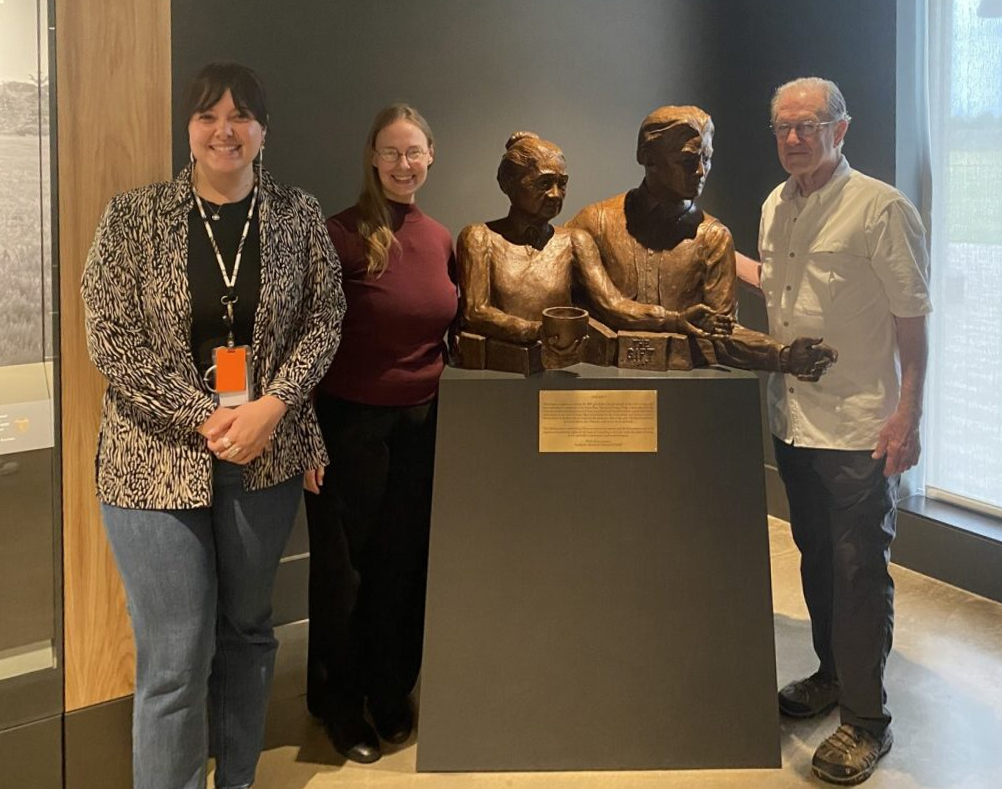
The artist with Claire Young, Curator Choctaw Cultural Center, and Maggie Malone, Registrar Choctaw Cultural Center.
Artist with wife Susan, son Casey, and daughter Amy at the Choctaw Cultural Center.
“Sharing Lands: Choctaw-Irish Friendship and the Gift”
CHOCTAW SCULPTURE: NATIONAL FAMINE MUSEUM DEDICATION
The following is an excerpt from an article published by The Irish Heritage Trust on August 6, 2024:
BRENDAN O’NEILL SCULPTURE GIVES INSIGHTS INTO
THE HISTORY OF IRISH FAMINE AID
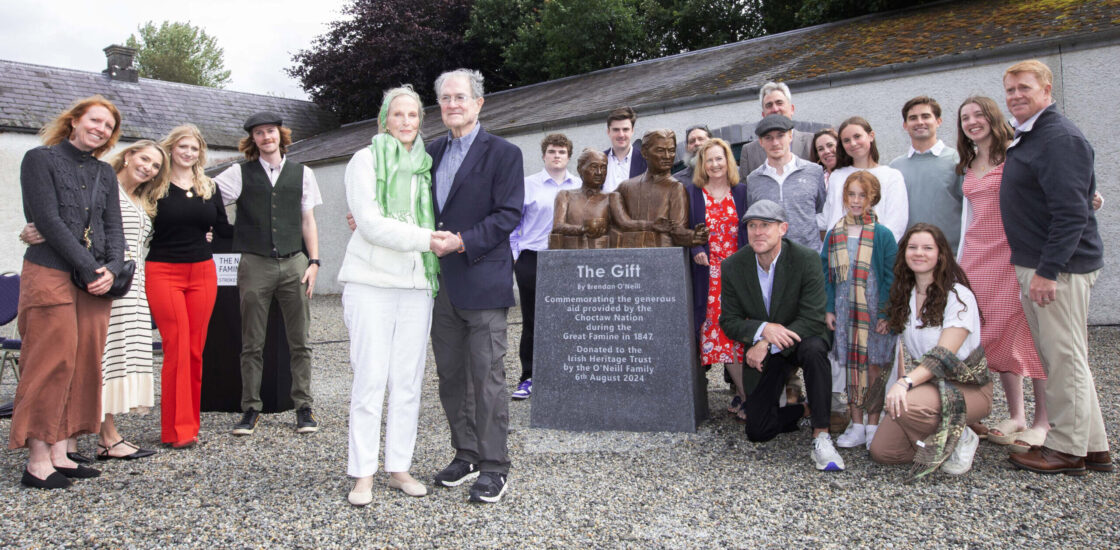
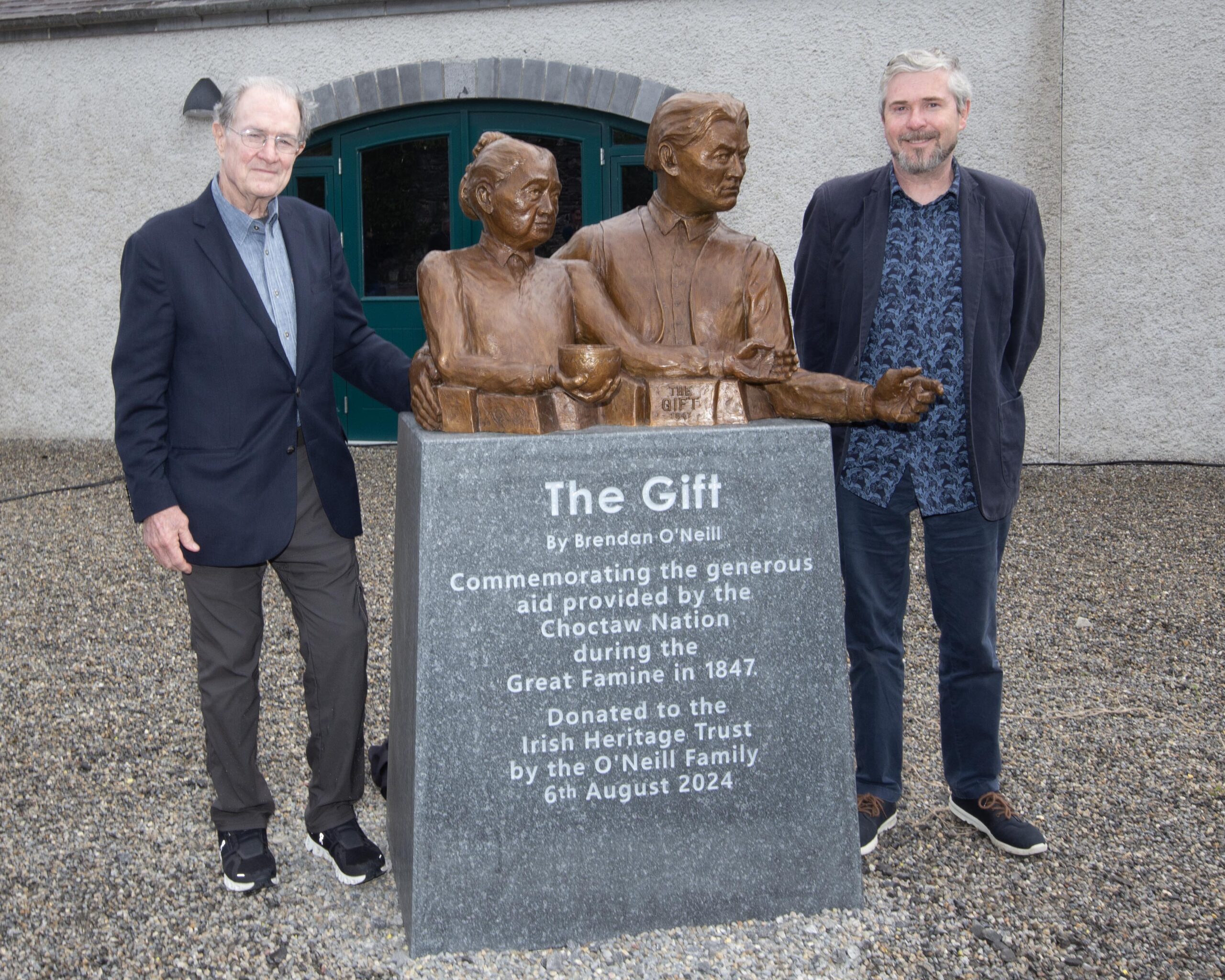
A life-size bronze sculpture entitled ‘The Gift’ has been unveiled outside the National Famine Museum at Strokestown Park. It commemorates the generous aid provided by the Choctaw Nation to Ireland during the height of the Great Irish Famine.
CHOCTAW FAMINE AID SCULPTURE
Esteemed American sculptor Brendan O’Neill, based in Maryland in the USA, sculpted and donated ‘The Gift to the museum. It is a replica of his original piece displayed at the Choctaw Cultural Centre in Oklahoma and is now permanently installed in the courtyard adjacent to the National Famine Museum.
Measuring 29 inches tall and 41 inches wide, this poignant artwork depicts an elderly Choctaw woman and a younger Choctaw man embracing in a gesture of support and protection. They extend a hand of friendship to the Irish people as the woman holds an “ampo,” or eating bowl, symbolising sustenance and nourishment.
COMMEMORATING GREAT HUMANITY
Brendan O’Neill has created numerous bronze sculptures for various institutions, including the State of Maryland, Indiana University, Native American reservations, and cultural centres. His work is characterised by its profound storytelling and historical significance capturing the essence of the human spirit and heritage. This piece symbolises the matriarchal structure of the Choctaw society. The period clothing, features, styling and native symbols were meticulously crafted with guidance from Choctaw Cultural Centre’s Curator, Claire Young.
Reflecting on the inspiration for ‘The Gift’, Mr. O’Neill said: “Given my ancestral ‘O’Neill’ Irish roots and my interest in Native American history and culture, I was naturally struck by the significance of the Choctaw Nation’s gift to the Irish during ‘An Gorta Mór’ in 1847. I reached out to the Choctaw Elders and offered to commemorate that gift with a bronze sculpture, which I sculpted over a two-year period and delivered to the Choctaw Cultural Centre, in September 2023. I am delighted to donate a copy of this sculpture with The National Famine Museum in Ireland.”
INDIGENOUS AID- THE CHOCTAW & IRELAND
Up until the 1830s, the Native American Choctaw had their traditional lands in Mississippi in the rich south-eastern part of the United States. The Indian Removal Act of 1830 looked to forcibly clear them from these lands and resettle them in what is now Oklahoma. Most Choctaws took the journey which became known as the “Trail of Tears” and many thousands died on the trail.
When Ireland was deep in the throes of the Great Famine in 1847, the international call for aid for the starving Irish was heard by the Choctaw. These people, who had no connection with Ireland and were themselves impoverished and marginalised, gave generously to the cause of Irish famine relief. This remarkable selfless act from people who were themselves still suffering following their displacement, has since been honoured and remains a great symbol of the humanity of giving to those in greater need. It has created a lasting friendship between the two nations.
http://TheIrishHeritageTrust.ie, “Commemorative Choctaw Sculpture Unveiled at the National Famine Museum”, Aug 06 2024
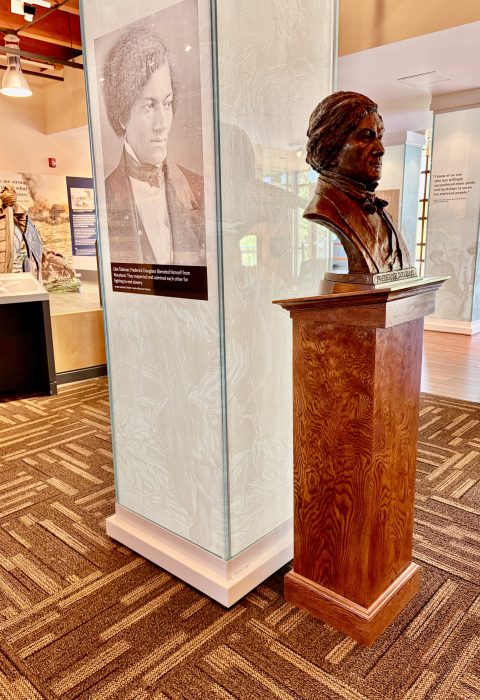
FREDERICK DOUGLASS BUST
ARTIST STATEMENT
Incredibly, two of our country’s most towering National figures have come from the Eastern Shore of Maryland. So, it seemed natural to create this bust of Frederick Douglass to accompany my earlier portrait of Harriet Tubman to celebrate these two activists from the same era and area, so different in style and paths taken, but so similar in their passion and commitment to Justice and Equality. Like my Tubman bronze, my Douglass bust is life–size, capturing him in his younger years. He had such a powerful face, I wanted to sculpt him without his beard. My intent was to capture Frederick Douglass in his prime–formidable and resolute with strong features, piercing eyes and stylish in formal attire. There is symbolism in the pedestal. It is built with 450 yr old Wye Oak signifying Douglass’s Maryland roots. And the shape of the pedestal resembles a lectern or podium which is a reference to Douglass’s brilliant oratory skills he employed so well in fighting for Abolition.
With Deep Respect,
Brendan Thorpe O’Neill
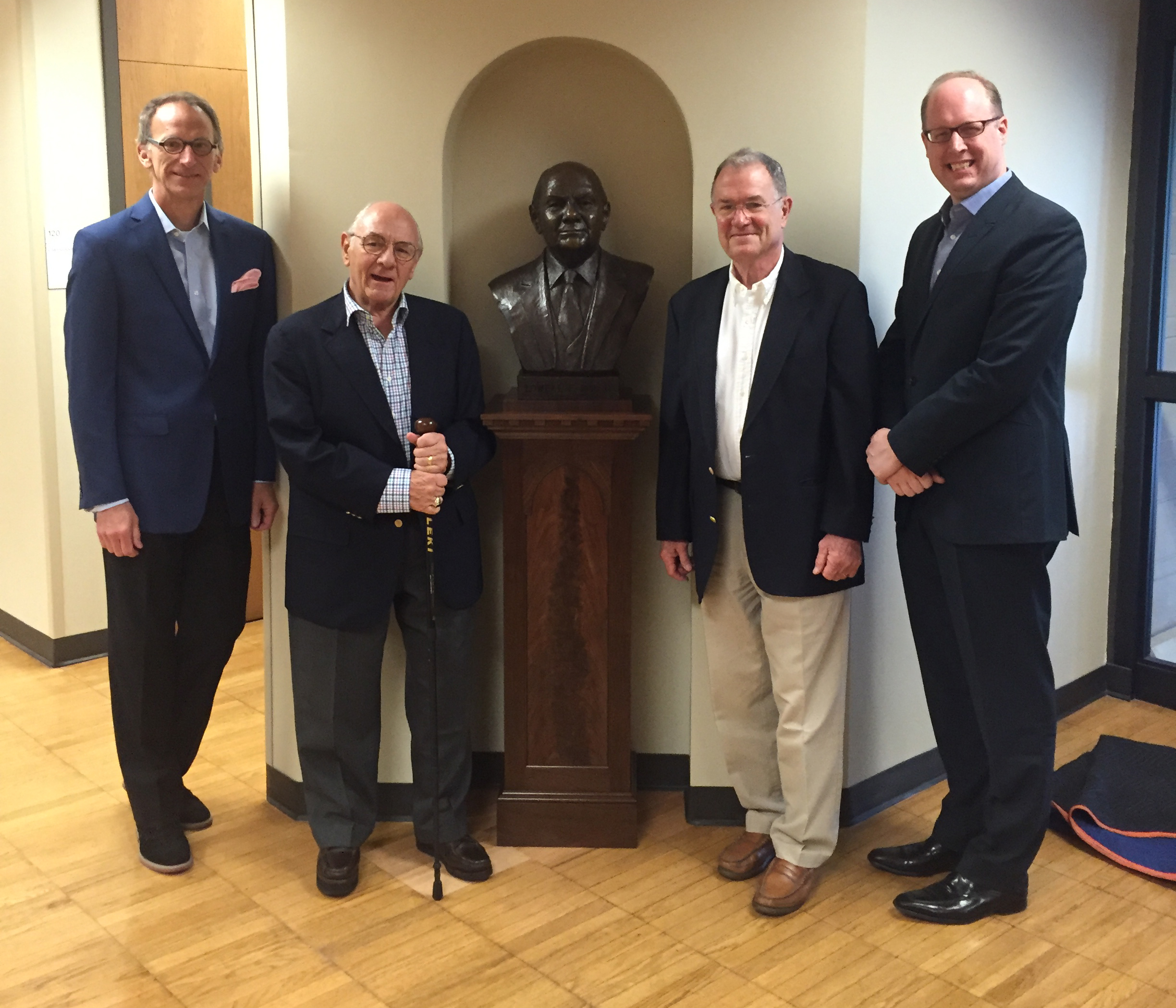
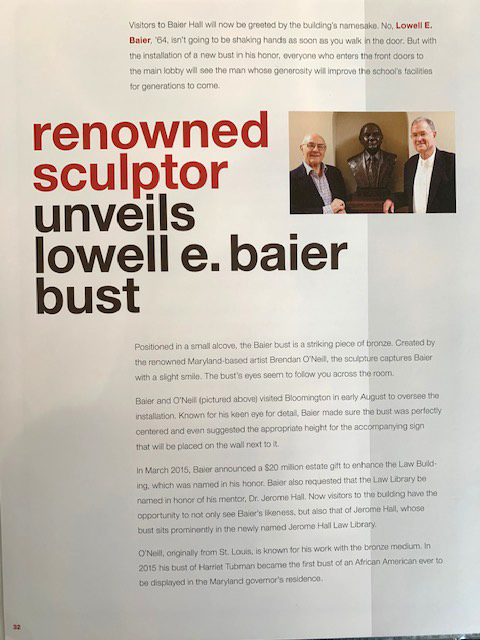
LOWELL E. BAIER UNVEILING
Bust of Lowell E. Baier unveiling at Indiana University Law School, Bloomington IN.
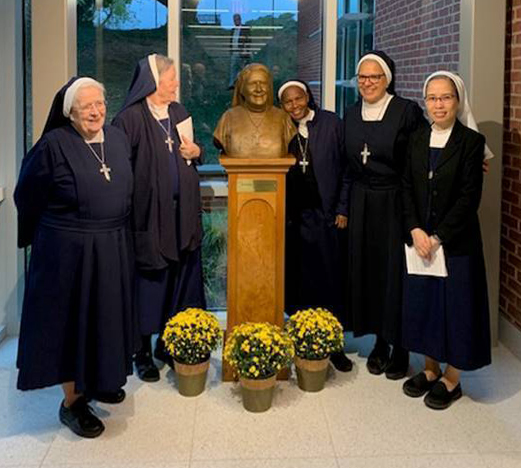
SISTER MARY BERCHMANS UNVEILING
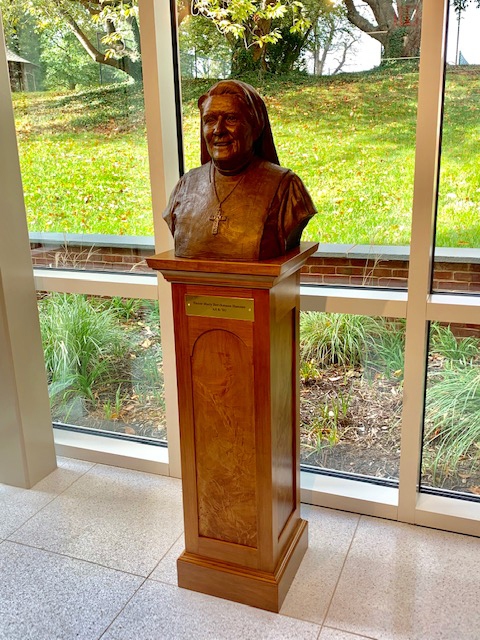
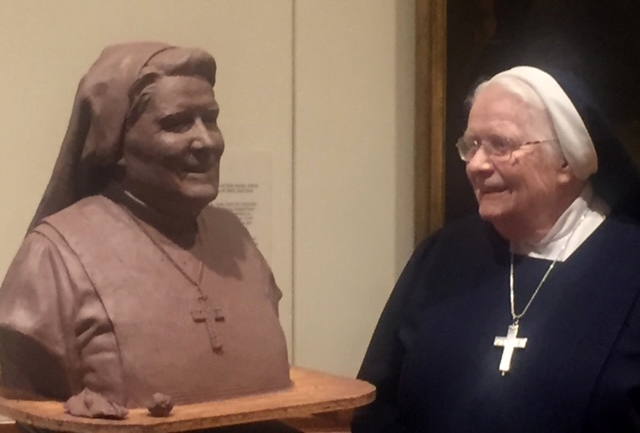
Bust of Sister Mary Berchmans unveiling at Berchmans Hall, Georgetown Visitation High School, Washington DC.
BISHOP CHESTER FRIEND UNVEILING
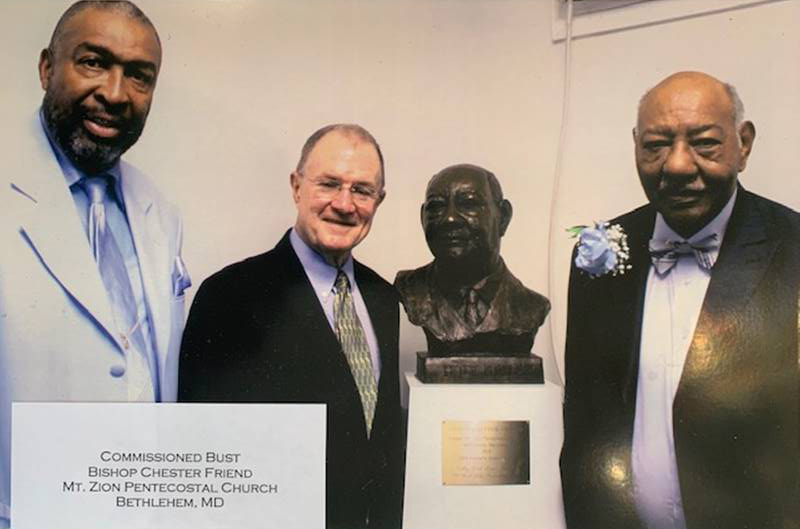
Bust of Bishop Chester Friend unveiling, Mt. Zion Pentecostal Church, Bethlehem, MD.